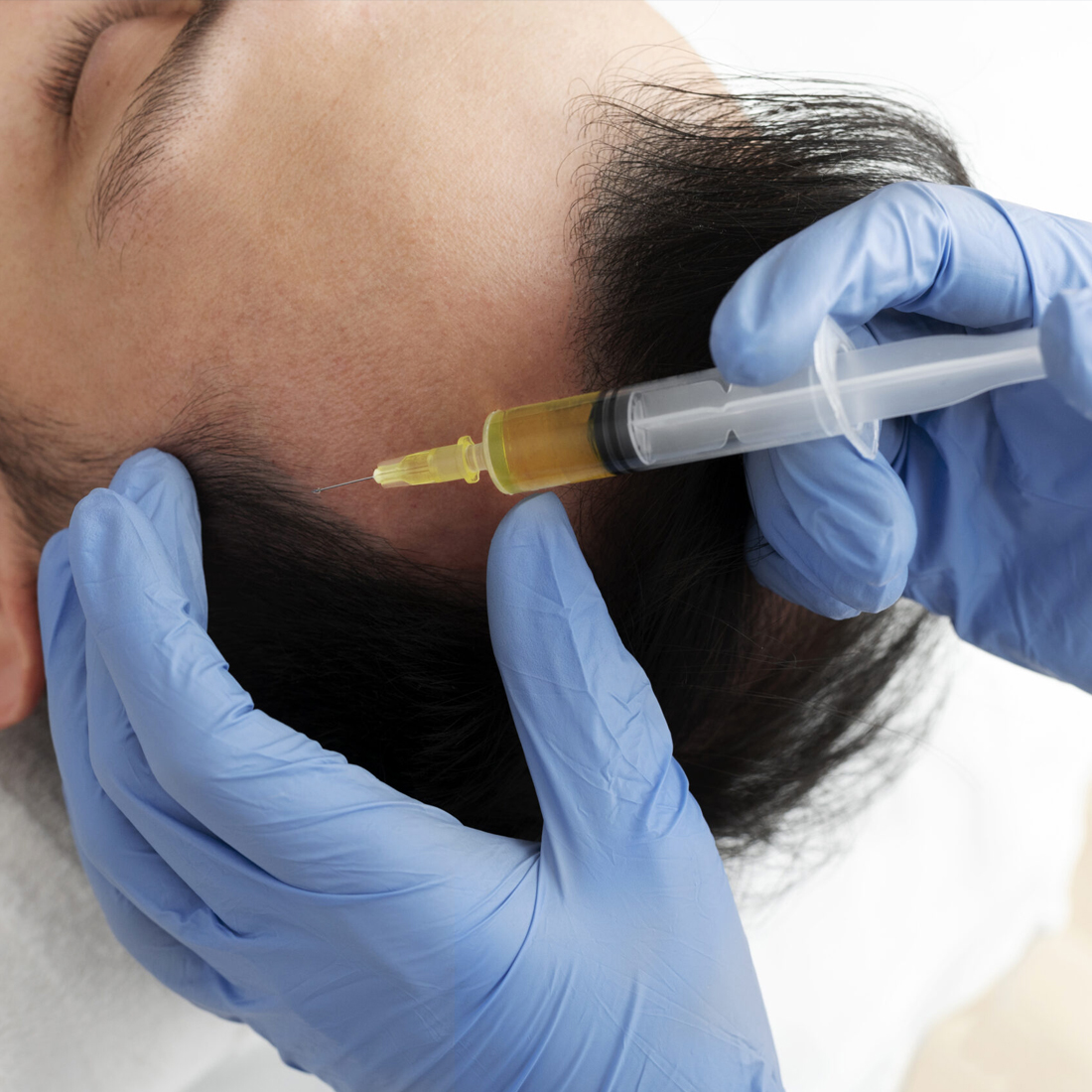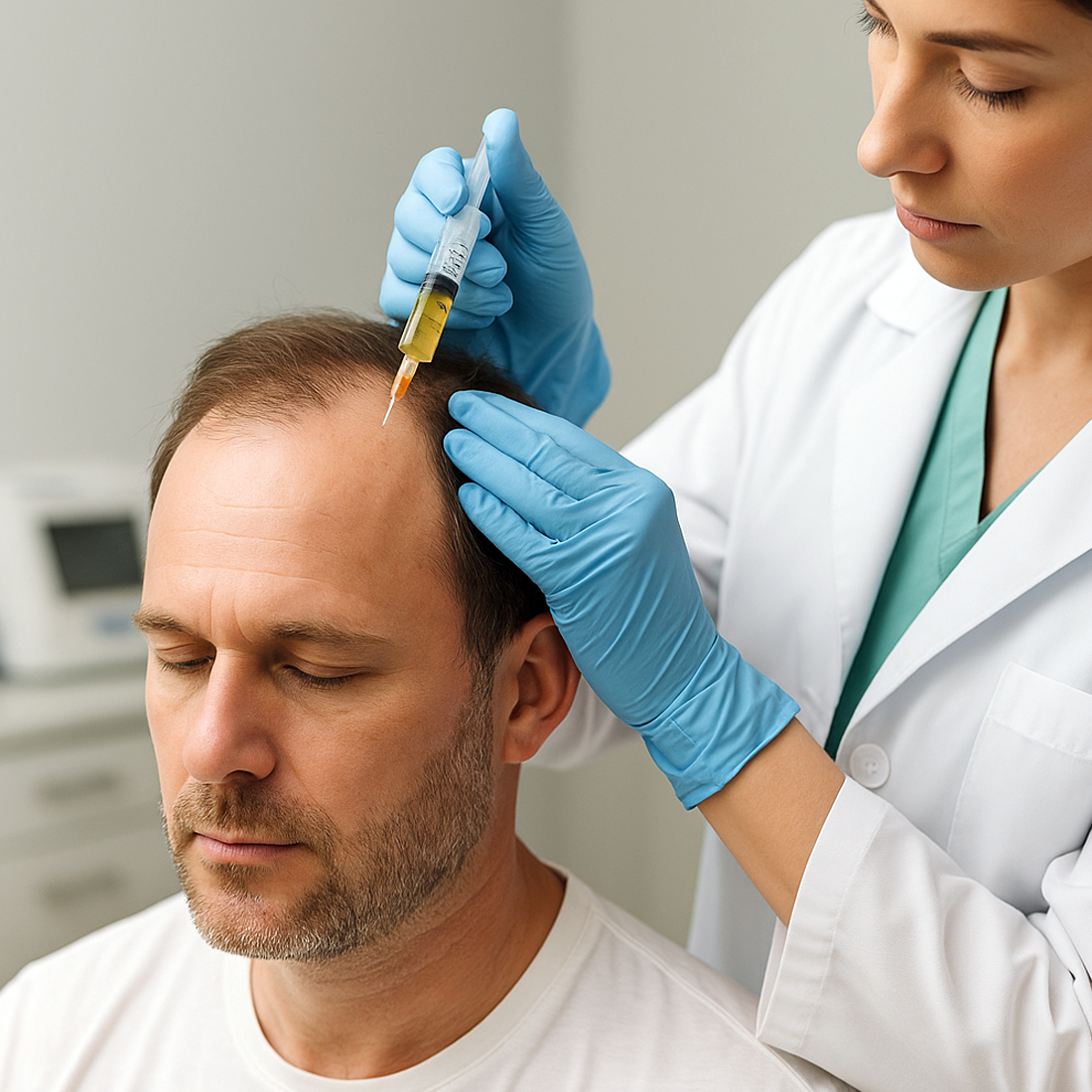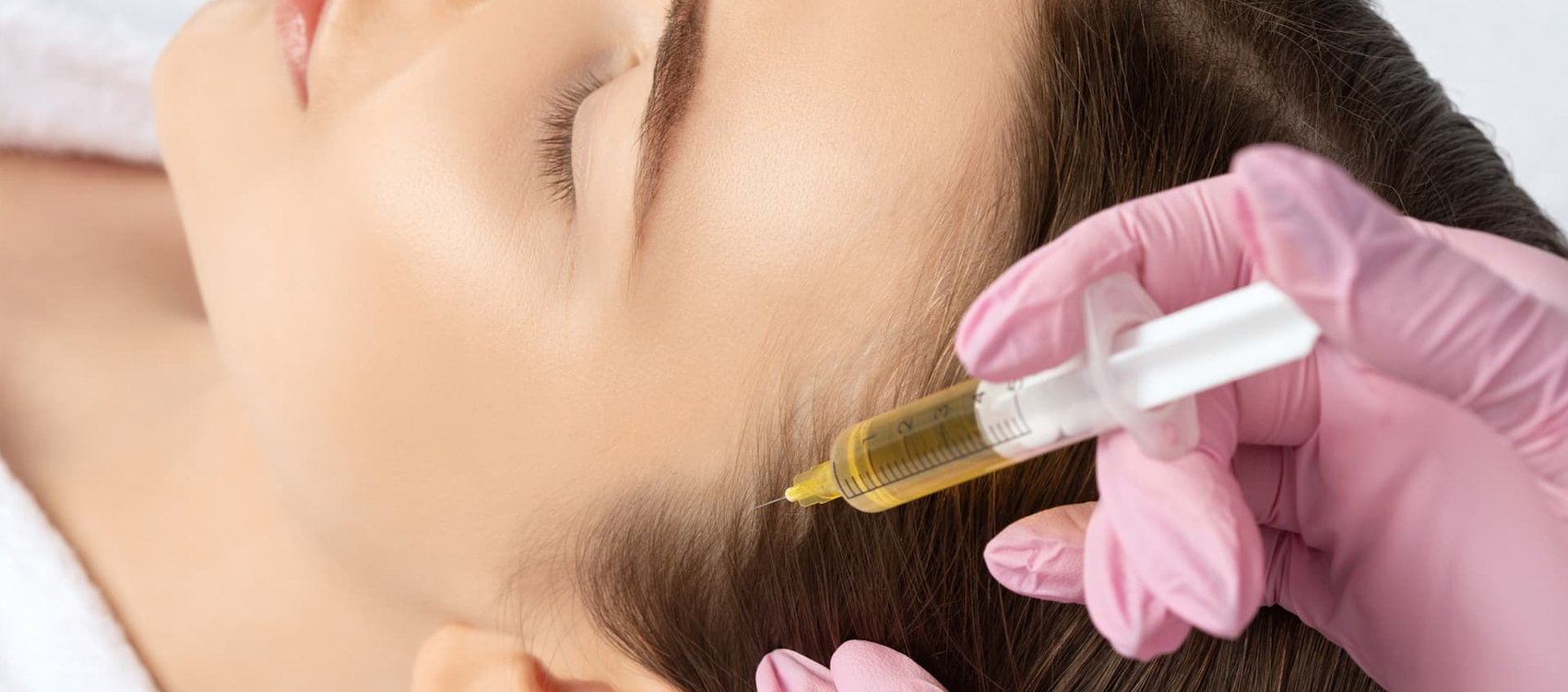
PRP (Platelet-Rich Plasma) treatment is a natural method obtained from the patient's own blood. During the procedure, approximately 10 cc of blood is drawn from the patient and separated from red blood cells through centrifugation. The resulting plasma helps hair follicles remain alive and healthy for a longer period during the transplantation process.
PRP plasma is rich in platelets (clotting cells) and leukocytes (white blood cells). Activated platelets and leukocytes secrete powerful growth factors that support hair follicle development. These growth factors contribute to the renewal of the scalp by triggering the proliferation of stem cells.
PRP-assisted hair transplantation helps hair follicles recover more quickly before and after transplantation. It accelerates the healing process in the scalp while supporting earlier hair growth, lengthening, and thickening. Under normal conditions, hair transplant results become apparent within 7–8 months, but thanks to PRP application, this process can be reduced to approximately 5 months.
An average of 10% graft loss can occur in hair transplant operations. With PRP treatment, this rate can be reduced to around 1%. Furthermore, since PRP is obtained from the person's own blood, it completely eliminates the risk of allergic reactions.
After hair transplantation, the treatment process is supported with PRP and mesotherapy applications, ensuring that the transplanted hair follicles are stronger, healthier, and more permanent. PRP-supported hair transplantation is an extremely effective method for individuals who want to achieve natural and successful results.
Platelet Rich Plasma (PRP) is defined as a platelet-enriched plasma application. In this method, a small amount of blood is taken from the individual and the plasma portion is separated using special tubes and a centrifuge process. The platelet-rich plasma obtained is then applied to the same person to complete the treatment process. Since it is obtained from the person's own blood, the PRP application is safe and does not carry the risk of allergic reactions.
The difference between PRP and FUE hair transplantation is that it is not a direct hair transplantation technique. PRP is a plasma and stem cell-supported treatment method that is used in conjunction with FUE hair transplantation and plays a supportive role in the operation. PRP treatment, applied during or after hair transplantation using the FUE technique, contributes to faster healing, strengthening, and healthy development of hair follicles. This ensures that hair transplantation results are more successful, permanent, and natural-looking.