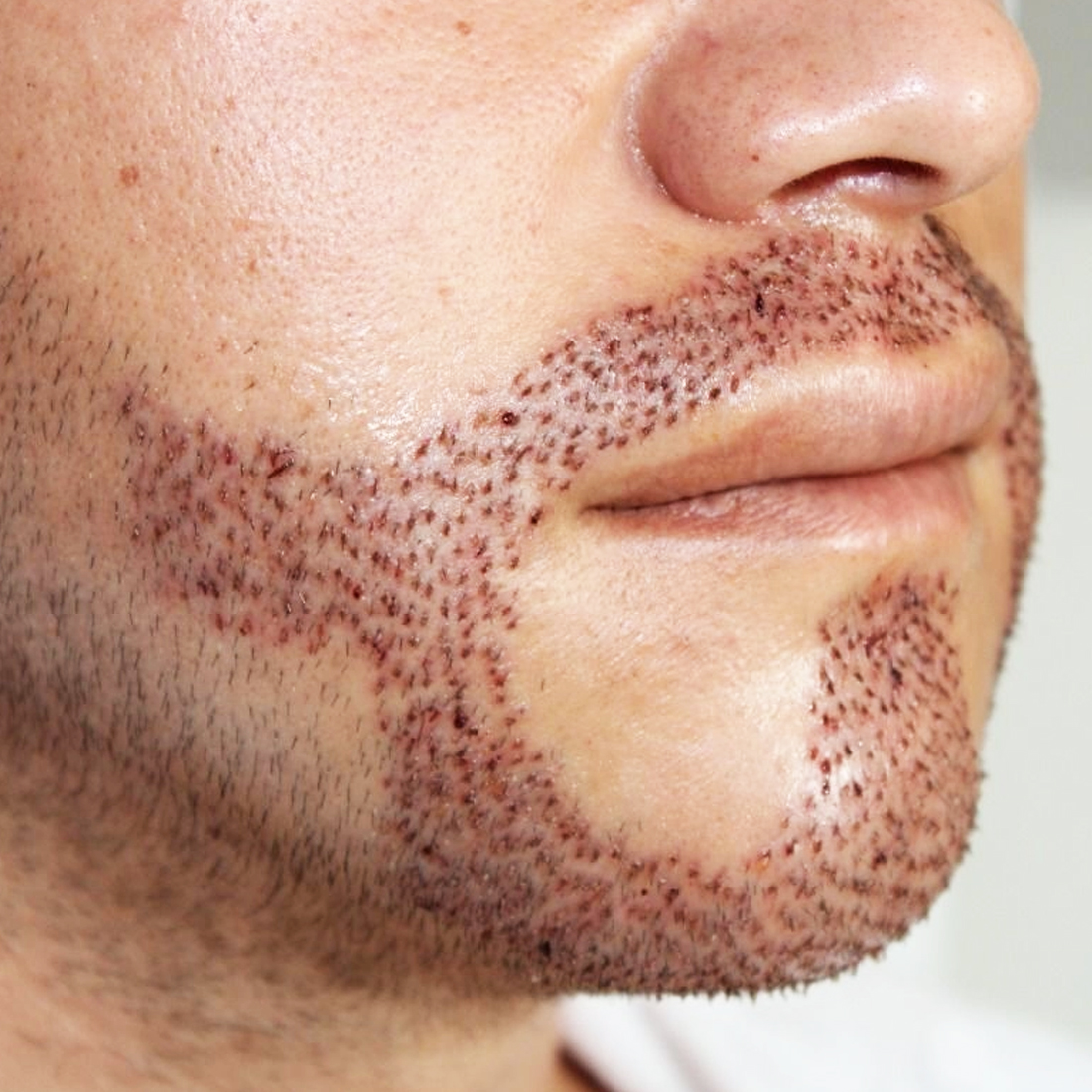
Beards are an important aesthetic feature for men in our society. However, there can be many different reasons for thinning or bald spots in the beard area. These reasons include congenital conditions commonly referred to as “baldness,” burns, past traumas, and surgical interventions.Deficiencies in the beard area can cause individuals to experience aesthetic concerns and, over time, a loss of self-confidence.
The beard transplant procedure is performed using the FUE (Follicular Unit Extraction) technique, one of the most commonly preferred methods today. In this method, hair follicles are individually extracted from the patient's nape area and transplanted into the deficient areas of the beard region, taking into account the natural direction and angle of growth. One of the most significant advantages of choosing the FUE method is that it leaves no scars and has a quick recovery period.
Beard transplant planning is done entirely according to the individual's needs. If beard loss is due to trauma, burns, or regional hair loss, the transplant is performed taking into account the existing beard density and natural boundaries. Hair follicles taken from the back of the head are mostly used as the donor area.
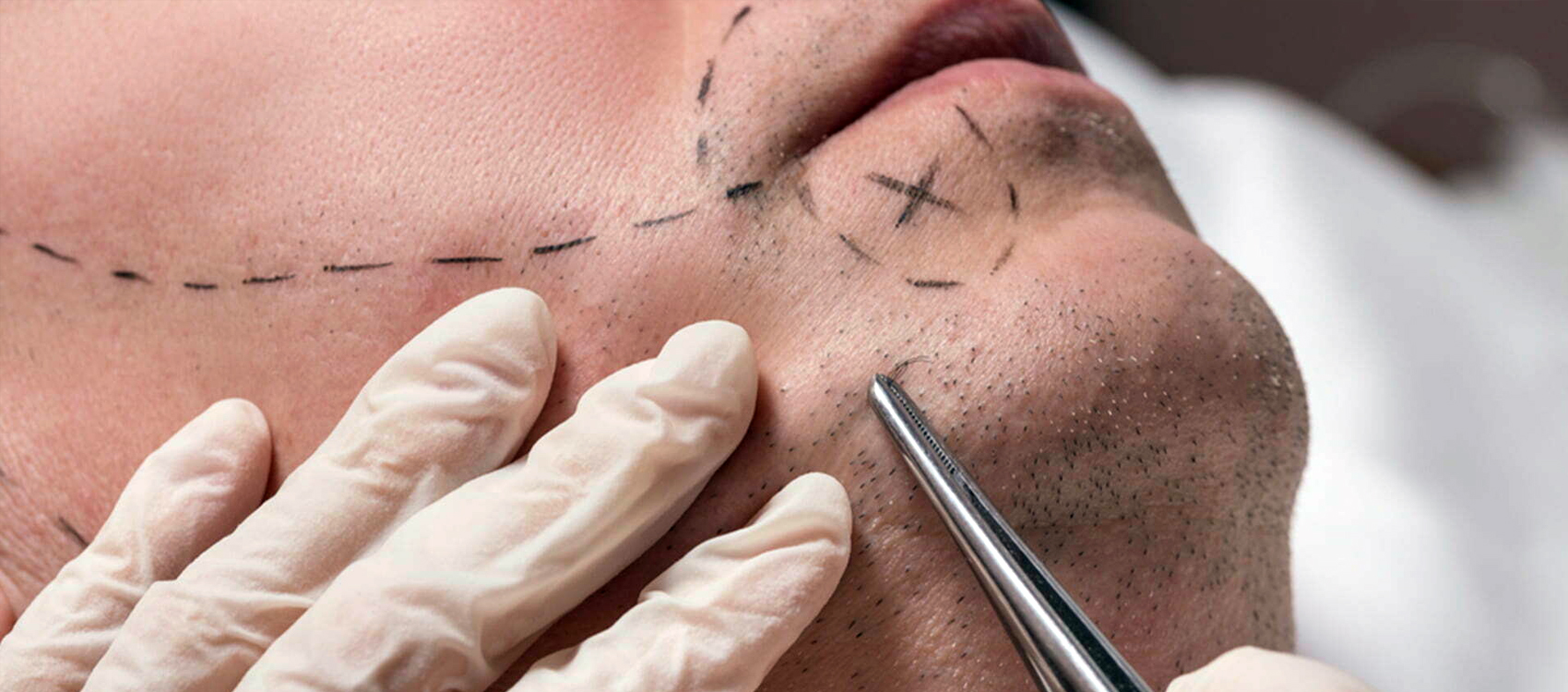
If the person has never had a beard since birth and is over the age of 20, the area to be transplanted is determined according to the person's requests, and a drawing is made in accordance with the facial features. The total number of hair follicles to be transplanted is also planned taking into account the person's expectations and facial structure. In this way, natural, aesthetic, and permanent results are targeted.
Beard transplantation is performed using the FUE (Follicular Unit Extraction) technique, one of the most commonly preferred methods today. The procedure begins with detailed planning and aims to achieve natural, aesthetic results.
In the first stage, the donor area from which the hair follicles will be taken is determined. In beard transplantation, hair from the neck and cheekbones, which are close to the beard area and less important from an aesthetic point of view, is preferred as the donor. If necessary, the nape of the neck can also be used as a donor area.
In the second stage, the beard area to be transplanted is determined, and the number of hair follicles to be transplanted to this area is planned. During the planning process, facial contours, the natural direction of beard growth, and the existing beard density are taken into account. Then, micro-channels are opened in the area to be transplanted. The direction and angle of these channels are very important for the beard to look natural.
In the final stage, hair follicles taken one by one from the donor area are carefully placed into the opened channels. The procedure is performed under local anesthesia, and the patient can return to their daily life on the same day.