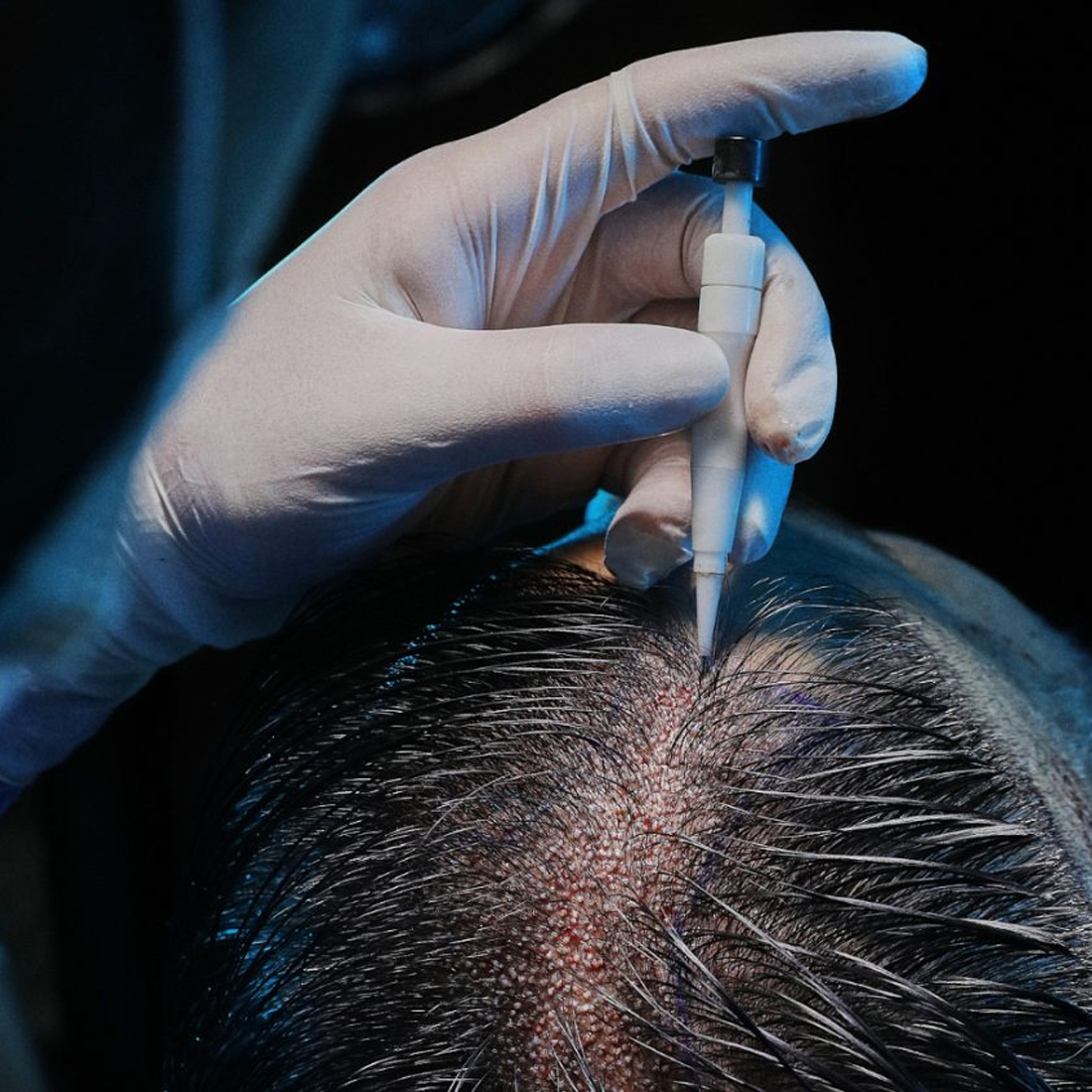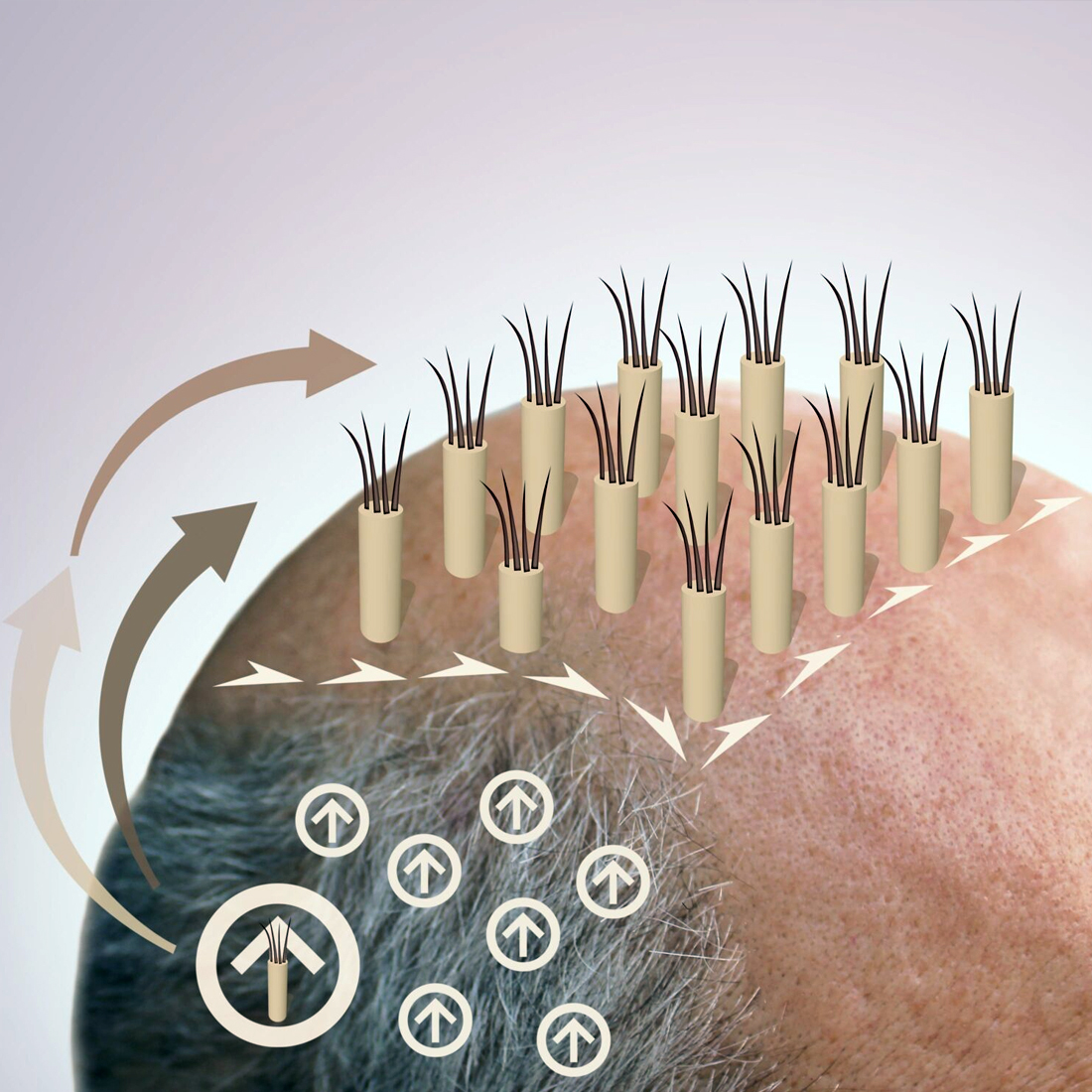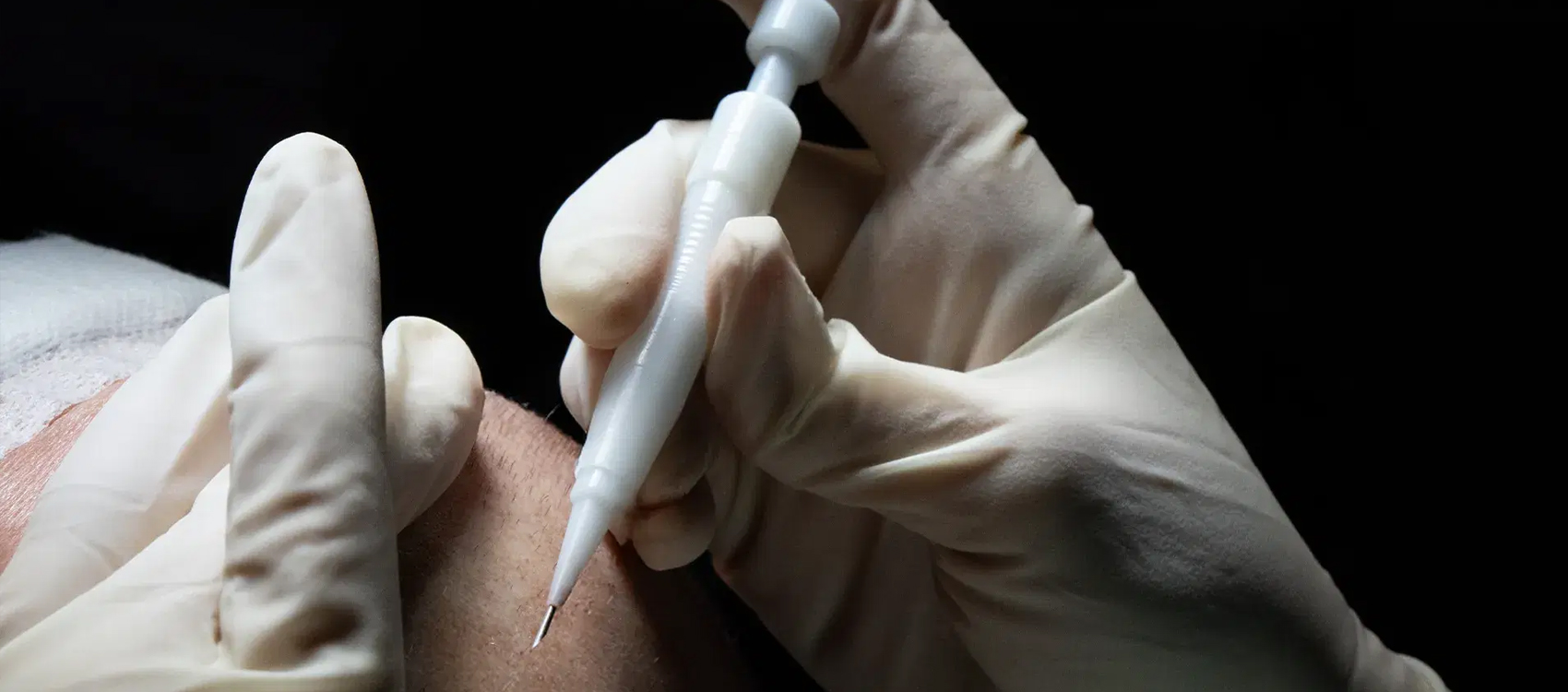
DHI Hair Transplantation (Direct Hair Implantation), known in Turkish as Doğrudan Saç Ekimi, is a modern hair transplantation method performed using the specially developed Choi (Implanter) pen. In this technique, hair follicles are harvested from the donor area using a medical pen that can only be used by specialists in the field, and are then directly implanted into the recipient area using the same pen, without creating channels or making incisions.
Unlike the classic FUE method, the DHI hair transplant technique allows hair follicles taken from the donor area to be transferred to the recipient area in a single step using the implanter. The Implanter/Choi needle is very thin, cylindrical, and sharp, and is channel-shaped. Hair follicles are placed into this channel and implanted under the skin in a controlled manner.
While graft collection and channel creation are performed as separate procedures in traditional hair transplantation methods, the DHI method combines these two procedures into a single step using a special pen. This provides the patient with a more comfortable surgical process and shortens the recovery time. In summary, while FUE hair transplantation consists of three stages, DHI hair transplantation is a two-stage procedure.
The main goal of the DHI hair transplant technique is to improve the quality of hair transplantation, achieve a denser and more natural look, prevent damage to existing hair, and allow the person to return to their daily life in a short time without the need to cut their hair.
DHI hair transplantation is a method that requires high sensitivity and expertise. For this technique to be successfully applied, it is of great importance that the doctor and team performing the procedure have undergone a comprehensive training process. The practitioner's theoretical knowledge and practical experience directly affect the results of the transplantation.
The person performing the DHI hair transplant procedure must be extremely careful, focused, and in good physical condition. Since DHI technique often involves transplanting hair between existing hairs, the working area is quite narrow and sensitive. Without sufficient experience, there is a risk of damaging existing hair follicles with Choi tips when working in this limited area. For this reason, DHI hair transplantation must be performed by teams that are experts and experienced in the field.